
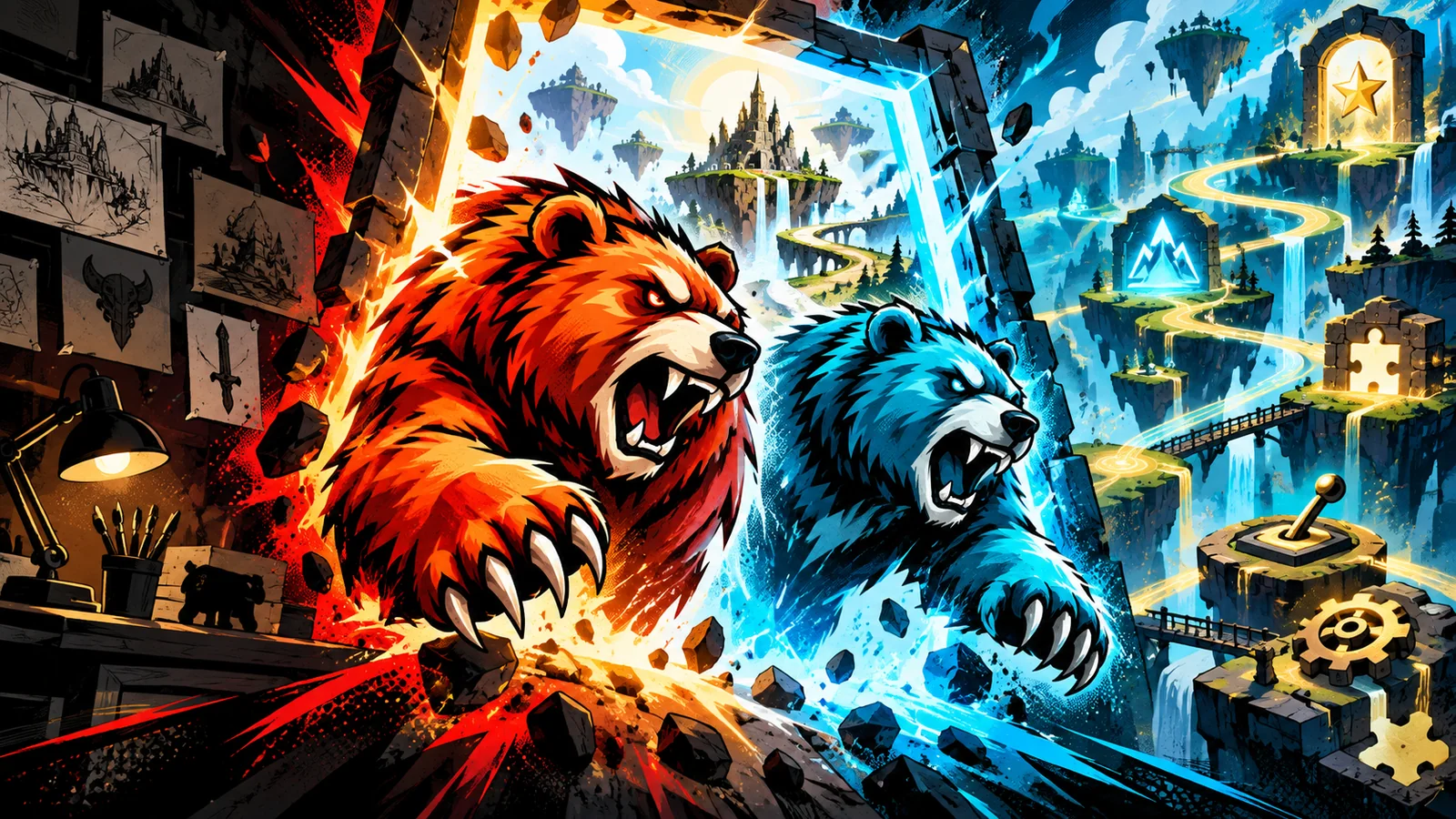
Judge a theme by the behaviors it enables: anticipation, reveal, reward, recovery, and return—not by the key art alone.
Ask what the world lets the game do
A useful theme is more than a visual wrapper. It gives the interface a vocabulary for states, transitions, anticipation, and reward. The strongest concepts make the next animation or sound feel inevitable inside their world.
Before expanding an art direction, map the theme to the repeated player actions. If the theme cannot support those actions without constant explanation, it may be compelling key art but a weak game system.
Build recognition at three distances
A title has to work as a small lobby tile, as a game-loading moment, and as a full interactive screen. Those are three different compositions with one identity.
The thumbnail needs silhouette and contrast. The loading moment needs promise. The game screen needs hierarchy that can withstand motion, symbols, counters, and controls.
- Thumbnail: one unmistakable visual idea
- Entry: a clear promise of tone and energy
- Play: a restrained hierarchy that protects information
Use novelty where it changes the experience
Novelty is most valuable when it helps the player predict or enjoy the next state. A surprising character reaction, transition, or reveal can reinforce the loop. Decorative complexity that competes with the result cannot.
For an operator, the question is not whether the theme has more detail. It is whether the theme gives the title a recognizable place in the catalog and remains readable during real play.

